What is a customer success story?
It's a story, not a report. Here's what that means and why it matters.
A customer success story is a piece of content that shows how a real customer used your product to overcome a challenge and get results. It's told from the customer's point of view, backed up with their own quotes and real numbers.
That's the textbook definition. But after writing 20+ customer case studies for MailerLite and MailerSend, I think it misses the most important word: story.
Most customer success stories aren't really stories at all. They're product brochures with a customer's logo stuck on top. Here's what I think a customer success story actually is, and why the difference matters.
It's a story, not a report
A lot of customer stories read like a quarterly report focused on how your business helps a customer. But nobody wants to read that.
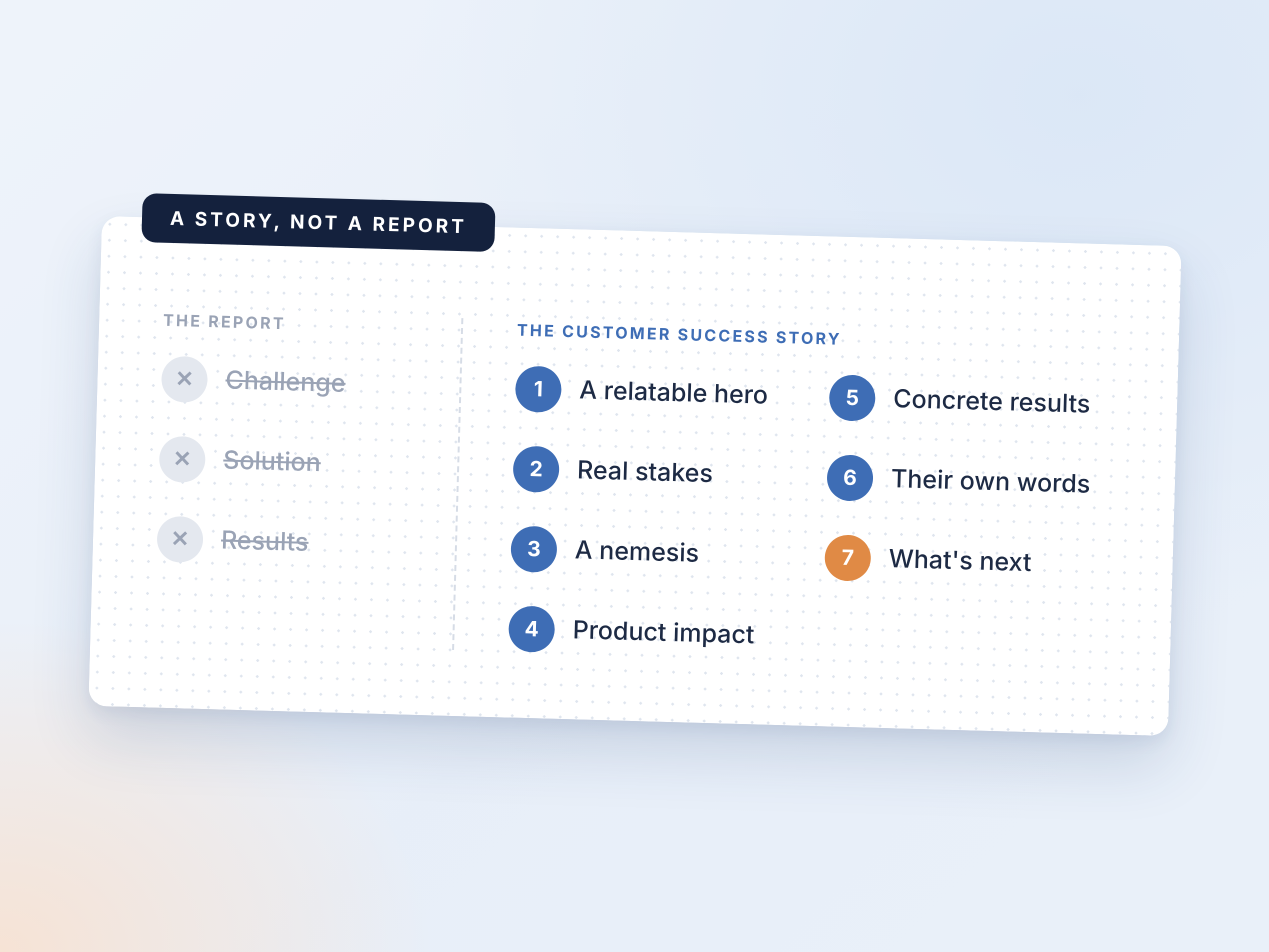
The best customer success stories borrow from actual storytelling. There's a relatable hero facing a real problem. There are stakes: something that would have gone wrong if nothing changed. There's a villain, whether that's an outdated tool, a broken workflow, or a competitor that let them down. And there's a transformation the reader can feel, not just read about.
That structure isn't decoration. It's what turns a potential buyer from someone skimming a page into someone thinking, "That's exactly the problem we have."
The customer is the hero, not your product
Another common mistake is when a company publishes a "customer story" that's really about itself: every paragraph is a feature, every heading is a product name, and the customer is just there to nod along.
In a real customer success story, your product plays the guide, not the hero. The story belongs to the person who used it. It's based around their thoughts, frustrations, and wins. Your product shows up at the moment it made a difference, and the specific features that helped get a mention, but the spotlight stays on the customer.
And I mean the person, not just the company. "Acme Corp increased efficiency" is forgettable. "Sarah, Acme's head of operations, stopped working weekends" is something a reader remembers, because they can picture themselves in her shoes.
What a great customer success story includes
Every strong customer story I've written has had the same core ingredients:
- A relatable hero who reflects the buyer you want to reach
- A clear challenge with real stakes, so the reader understands why change was essential
- A nemesis that brings the problem to life
- Your product's specific impact, focused on the features that actually made a difference
- Concrete results, with numbers wherever possible. You can argue with feelings, but you can't argue with real results.
- Quotes in the customer's own words, which show how they felt about the transformation
- A look at the future, so readers see the change lasting
The biggest result also needs to appear right at the start. Narrative matters, but many readers never get past the introduction. If the headline result isn't there, most people will never see it.
Why customer success stories matter more than ever
They're proof for your promises
Every brand makes promises. Save time. Cut costs. Grow faster. The problem is that every competitor makes the same promises, so buyers have learned to ignore them.
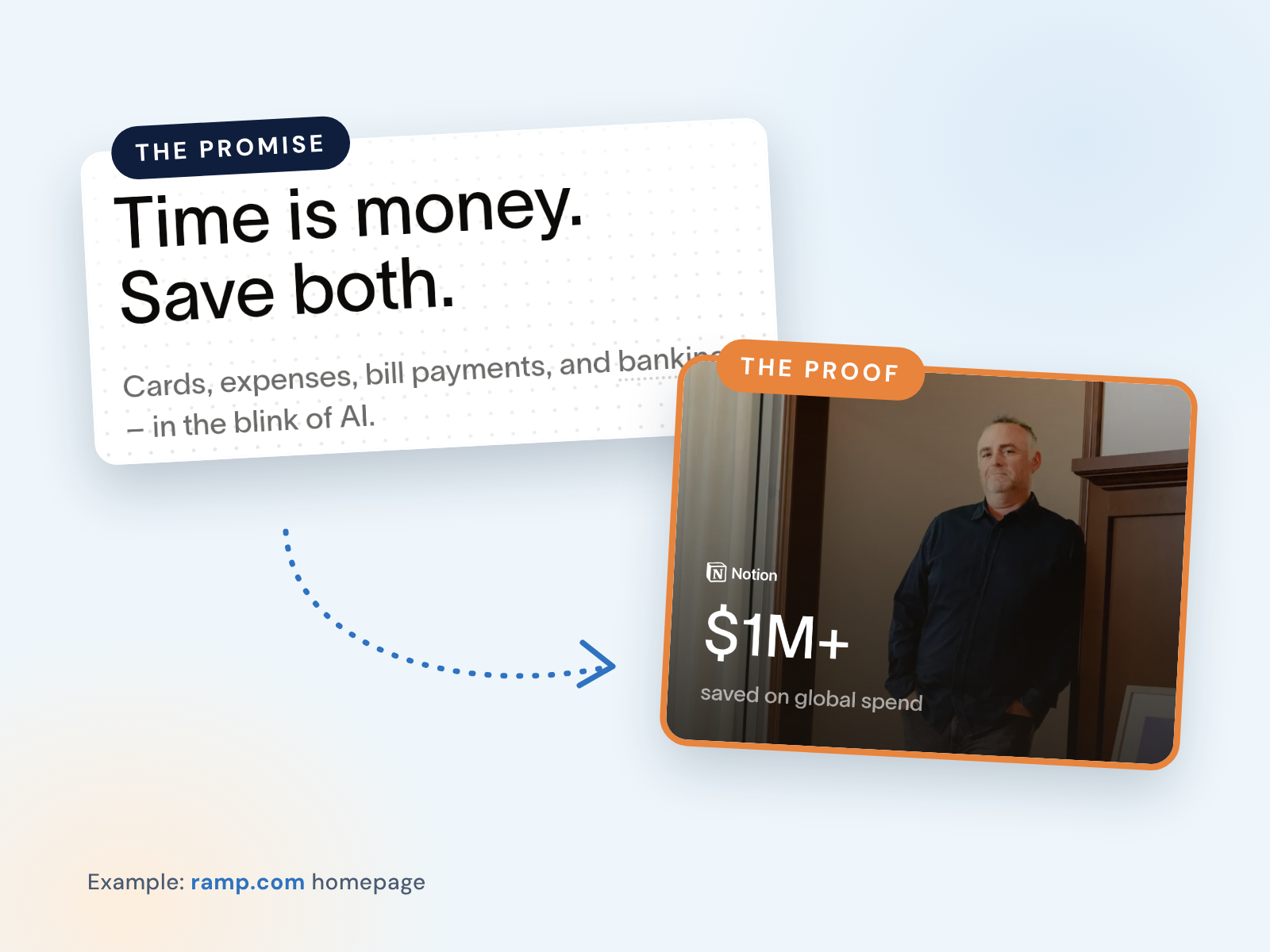
A customer success story turns a claim into evidence. Instead of saying your product saves time, you show exactly how a real company did it. That's why I think the most important story a brand can publish is the one that proves its main promise, placed right next to where you make that promise.
Your customers are a moat
In a market where AI lets anyone copy features faster than ever, I'd argue your customers are one of the few advantages competitors can't replicate. A new competitor can copy your product. It can't copy the results real people have achieved with it.
But that advantage only exists if people can see it. A happy customer nobody hears about is just a line in your CRM. Customer success stories are how you make that moat visible.
Customer success story vs case study vs testimonial
These terms get used interchangeably, and in practice there's a lot of overlap. But here's how I think about them:
- A testimonial is a quote. It's a short endorsement, useful as social proof but with no context about the problem or the results.
- A case study is the traditional, more formal version: often structured as challenge, solution, and results, and sometimes closer to a report than a story.
- A customer success story is a case study told properly. Same evidence, but built around a person and a narrative, so people actually want to read it.
Each form has it's place, and you can turn one story into multiple pieces of content.
One story is never enough
Publishing your first customer success story is a great start. But one story can only reflect one customer, one use case, and one challenge.
Your buyers are more varied than that. A CFO and a marketing lead care about different outcomes. A small business and an enterprise team face different problems. The goal is to build a library of stories over time, so that every potential buyer can find someone like them in it.
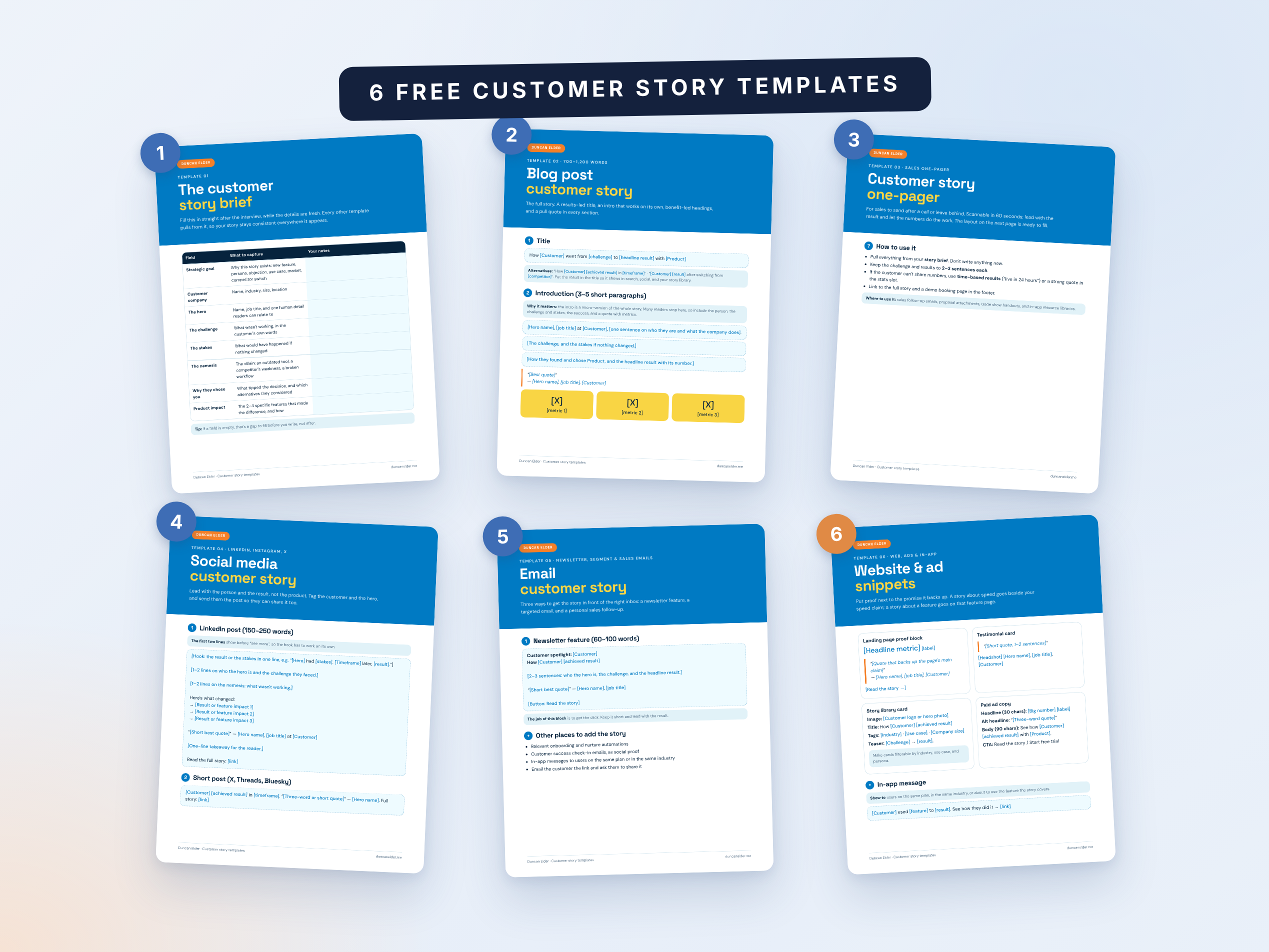
And don't let any single story stop at the blog post. Each one is a source of quotes, metrics, and insight you can reuse in sales emails, landing pages, social posts, and ads.
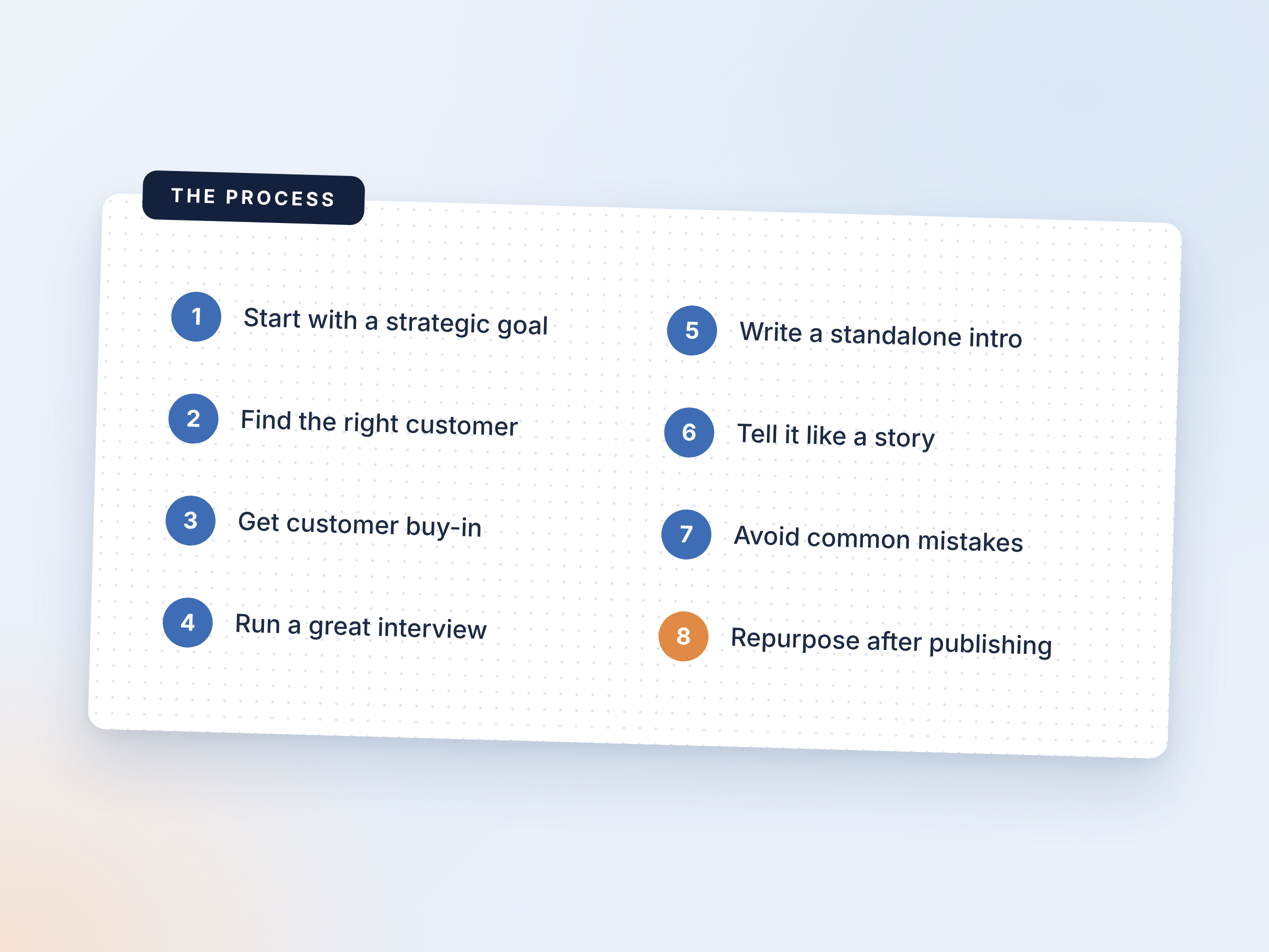
Ready to write your own? Start with my guide on how to write a customer success story, then grab my free customer success story templates to turn each story into every format you need.